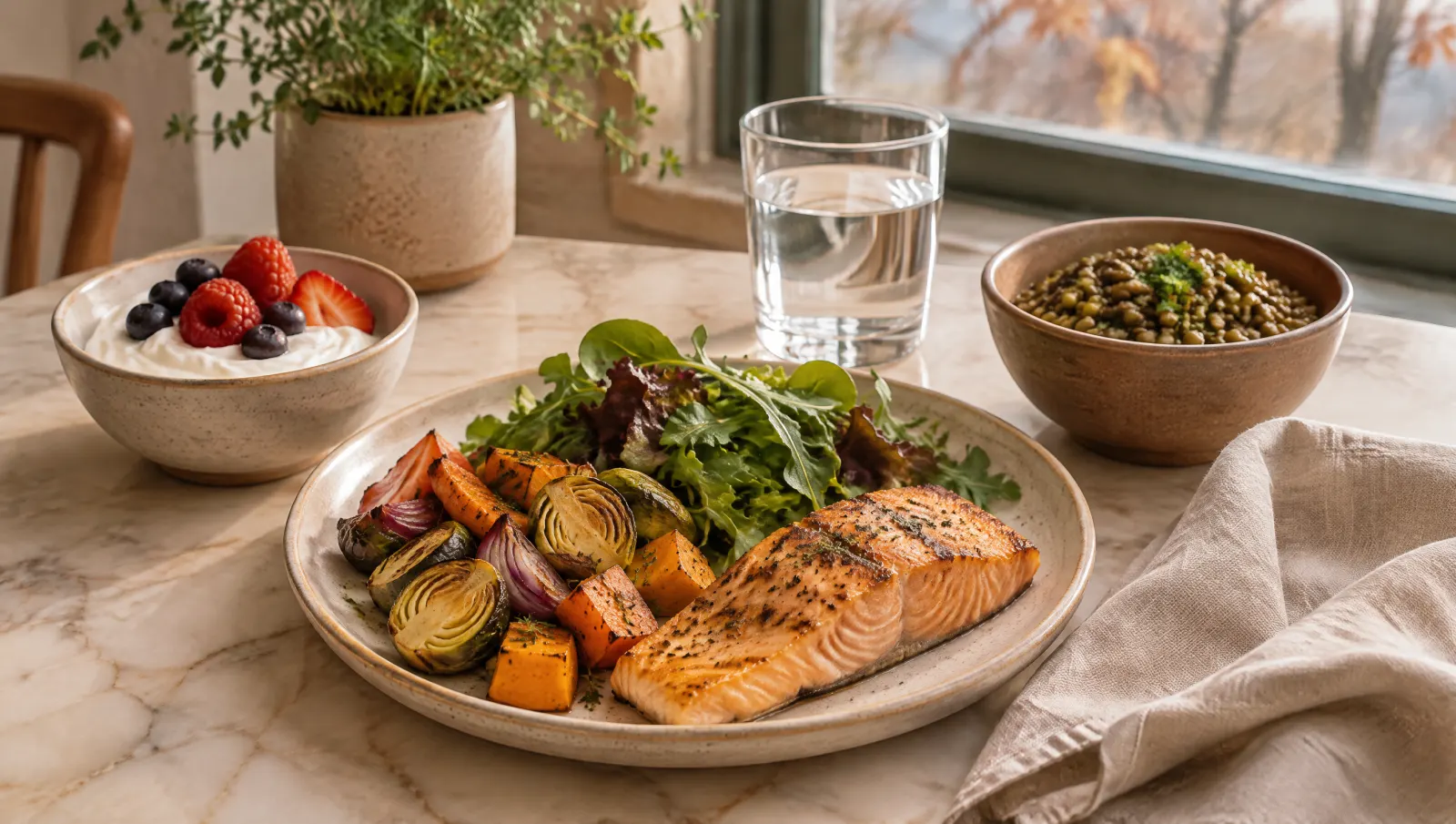
While taking a GLP-1 medication, it generally helps to build each meal around protein, add fiber gradually, drink fluids steadily, and keep portions small and easy on your stomach. Because appetite often drops, food quality matters more. At NuHealth Medical Wellness in Royal Oak, Michigan, your provider tailors these basics to your labs and health history.
Why does nutrition matter more on a GLP-1?
Nutrition matters more because you may be eating less than you are used to, so each meal has less room to cover your needs. GLP-1 medications work partly by slowing digestion and reducing hunger. That can be helpful for weight management, but it also means it is easier to fall short on protein, fiber, and key vitamins without noticing.
A 2025 joint advisory published in the journal Obesity by four nutrition and obesity medicine societies made this point directly. It warns that reduced intake can raise the risk of nutrient shortfalls and loss of lean mass (muscle, organ and other non-fat tissue), and it calls for nutrition support alongside the medication, not as an afterthought. The authors also note that practical guidance in this area is still limited, so plans should be individualized.
How much protein do you need on a GLP-1?
There is no single protein number that fits everyone, and the 2025 advisory says there is "still no consensus on the optimal approach" to setting a target. What experts agree on is the direction: protein deserves priority, because it helps support muscle while you lose weight.
In practice, that usually means:
- Eat protein first. The advisory suggests protein-rich foods can be eaten first in a meal, before you feel full.
- Spread it out. A source of protein at each meal is easier to manage than one large serving.
- Choose foods you tolerate. Eggs, Greek yogurt, cottage cheese, fish, poultry, tofu, beans and lentils are common options.
Your individual target depends on your body size, kidney function, activity level, and other health factors. That is a decision for your provider, ideally with input from a dietitian, not a number to copy from the internet.
Can you lose muscle on a GLP-1?
Yes, some of the weight lost during any significant weight reduction can come from lean mass, including muscle. The 2025 advisory notes that how much lean mass is lost is influenced by whether strength training is part of the plan.
That is why adequate protein on its own is unlikely to be enough. Regular resistance exercise, such as bodyweight moves, bands, or weights, gives your muscles a reason to stay. If you are new to exercise or have joint or heart concerns, ask your provider what is safe for you before starting.
What foods help with GLP-1 side effects?
Some eating habits may make common side effects like nausea, fullness, and constipation easier to manage. The advisory recommends smaller, more frequent meals, eating slowly, and going easy on large, greasy, or very fatty meals, which tend to sit heavily when digestion is slower.
For constipation, a gradual increase in fiber (from vegetables, fruit, beans and whole grains) plus steady fluids is the usual first step. Add fiber slowly; a sudden jump can cause bloating. For a deeper look, see our guide to GLP-1 side effects and how to manage them.
Contact your provider promptly if you have severe or ongoing abdominal pain, repeated vomiting, or signs of dehydration such as dizziness or very dark urine.
What should you limit on a GLP-1?
It is usually wise to limit alcohol, sugary drinks, and large high-fat meals. The advisory notes that alcohol may worsen nausea and reflux and suggests keeping it to a minimum. Sugary drinks add calories without protein or fiber, which matters when your appetite is small.
You do not need a perfect diet. Think of it as making the most of a smaller plate.
A simple plate to start from
| Part of the plate | Why it matters | Easy options |
|---|---|---|
| Protein | Helps support muscle during weight loss | Eggs, yogurt, fish, chicken, tofu, lentils |
| Vegetables and fruit | Fiber, vitamins, and minerals | Leafy greens, roasted vegetables, berries |
| Fiber-rich carbs, small portion | Digestion and steady energy | Beans, oats, whole grains |
| Fluids, through the day | Hydration and constipation prevention | Water, unsweetened tea, broth |
Do you need vitamins or supplements on a GLP-1?
Some people may need a supplement, but it depends on your diet and your labs. The 2025 advisory lists several nutrients worth watching when intake is low, including iron, calcium, vitamin D, and vitamin B12, and suggests checking levels rather than guessing.
At NuHealth, labs are part of the starting process, and your provider can recheck them over time. You can learn what a baseline panel covers on our lab panels page. Persistent fatigue, unusual hair shedding, or muscle weakness are worth mentioning at your check-in.
How NuHealth supports nutrition in the weight loss program
At NuHealth, medication is one part of a medically supervised program, not the whole plan. After a free consultation and labs, a licensed provider decides whether a GLP-1 medication is appropriate for you. If it is, your plan includes monthly check-ins and 24/7 provider messaging, so nutrition, side effects, and dosing can be reviewed and adjusted as you go.
NuHealth's GLP-1 options, compounded semaglutide and compounded tirzepatide, are prepared by a state-licensed 503A compounding pharmacy. Compounded medications are not FDA-approved, and they are not interchangeable with brand-name products. The FDA explains its concerns about unapproved GLP-1 drugs here. GLP-1 medications are not right for everyone, including people who are pregnant or planning pregnancy, or who have a personal or family history of medullary thyroid cancer or MEN 2, and some people with a history of pancreatitis. Your provider reviews this with you.
Frequently Asked Questions
What should you eat first on a GLP-1?
Many experts suggest starting each meal with protein, before you feel full. Foods like eggs, Greek yogurt, fish, chicken, tofu, or lentils are common choices. Your provider can help you adjust based on what you tolerate.
How much protein should I eat on a GLP-1?
There is no single number that fits everyone, and a 2025 joint advisory notes there is no consensus on the best way to set a target. Your needs depend on your body size, kidney function, and activity level. A licensed provider or dietitian can set a target that fits you.
Can I drink alcohol while taking a GLP-1 medication?
Alcohol may worsen nausea and reflux for some people taking GLP-1 medications, and a 2025 nutrition advisory suggests keeping it to a minimum. It also adds calories without nutrition. Ask your provider what is reasonable for you.
Do I need to exercise while on a GLP-1?
Exercise is strongly encouraged, especially strength training. Some of the weight lost during weight reduction can come from muscle, and resistance exercise plus enough protein may help preserve it. Check with your provider before starting a new routine if you have health concerns.
Does NuHealth help with nutrition during the weight loss program?
Yes. NuHealth's weight loss program in Royal Oak, Michigan, and by telehealth in MI, FL, AL, MS, GA, CO, PA, and OH includes labs, a provider-led plan, monthly check-ins, and 24/7 provider messaging. Nutrition, side effects, and progress are reviewed together, and treatment decisions are always made by your licensed provider.
Wondering whether a medically supervised weight loss program fits you? Start Free Consultation or explore our weight loss program.
This article is for educational purposes only and is not medical advice. Always consult a licensed provider about your individual health needs.